In the fast-paced world of modern manufacturing, time is the ultimate currency. Every minute a machine sits idle for setup or changeover is a minute of lost revenue and wasted potential. This is the problem that quick-change tooling systems are designed to solve. By drastically reducing the time required to switch from one job to another, these systems are revolutionizing shop floors, from small job shops to high-volume production facilities.
However, as with any significant investment, the decision to implement a quick-change system requires a careful analysis of your specific needs, production volume, and machine condition. This article explores the mechanics of quick-change tooling, its undeniable benefits, the critical financial math behind it, and common pitfalls to avoid.
The Mechanics of Modern Quick-Change Systems
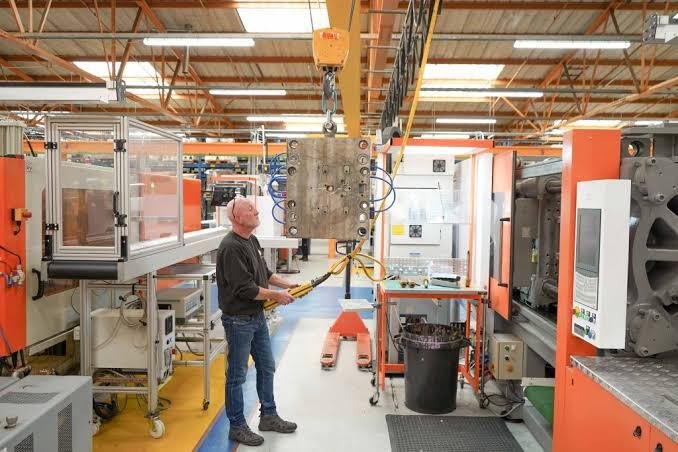
At its core, a quick-change tooling system is designed to decouple setup time from machine time. The fundamental principle is offline preparation. Instead of setting up tools while the machine is stopped, operators prepare the next set of tools on a presetting cart or station outside the machine while it is still running the current job .
This principle applies across various manufacturing processes:
- CNC Turning & Machining Centers: Systems like Sandvik Coromant’s QS™ or Coromant Capto® allow for the rapid exchange of cutting heads. What used to take 5-10 minutes for a turning tool holder can be reduced to as little as 30 seconds .
- Press Brake Operations: Modern clamping systems enable operators to swap out entire tool strings, rather than individual segments, slashing changeover times from 15-30 minutes to just a few minutes .
- Electrical Discharge Machining (EDM): Even small innovations, like the 3R quick-change system, can have a massive impact by allowing “one-touch” setup and eliminating the need for time-consuming in-machine part alignment .
- End-of-Arm Tooling (EOAT): In robotics, quick changers allow a single robot arm to swap between grippers, welders, or other tools in seconds, enabling highly flexible automation cells .
The technical benefits of these systems go beyond just speed. High-quality modular systems also provide exceptional repeatability and precision. For instance, advanced systems for sliding head machines offer indexing precision down to ±2-3 microns, ensuring that swapped tools return to the exact same position, eliminating the need for recalibration .
The Real-World Impact: Efficiency and Safety
The push for quick-change tooling is driven by a powerful blend of efficiency gains and safety improvements. A 2026 case study from the Chinese aviation industry provides a perfect example: The company invested just over $15 (100 yuan) in new fixtures to implement a quick-change EDM process. The result was a 37% increase in machining efficiency, drastically reducing the time to produce a critical avionics component .
Operational Efficiency
- Reduced Machine Stoppages: By pre-setting tools outside the machine, the “green light” (the percentage of time a machine is actively producing) stays on longer .
- Elimination of Scrap: Quick-change systems eliminate the need for “first test components” or “measuring cuts” that are often scrapped. Since the tool’s offset is known from the presetting device, the first part off the machine is often a good part .
- Maximized Utilization: In a high-mix environment, the ability to perform eight changeovers per shift rather than two can pay for a system in under a year .
Safety Improvements
A critical, and often overlooked, advantage of quick-change systems is ergonomics and safety. By moving the setup process outside the machine, operators are no longer reaching into tight, hazardous spaces to change heavy or sharp tools .
In press brake operations, for example, changing an upper punch is a significant safety hazard due to the risk of the heavy, sharp punch falling. Modern quick-change systems feature safety-click mechanisms that physically lock the tool into place before clamping pressure is applied, reducing the risk of serious hand injuries .
When Quick-Change is (and isn’t) a Smart Investment
Despite the clear advantages, a quick-change system is not a one-size-fits-all solution. The decision to invest should be based on a clear financial calculation. As one industry expert put it, “Buying an automated clamping system to accelerate redundant, unnecessary changeovers is like buying a faster car to make up for getting lost on the way to work” .
The ROI Math
The payback period for a quick-change system depends entirely on the number of changeovers performed. The break-even point varies based on your shop rate, but it’s typically around five complex setups per shift .
- Low-Mix, High-Volume: If you are a manufacturer producing thousands of the same part for weeks on end, the speed of a quick-change clamp is irrelevant. Your machine spends 99% of its time bending and 1% sitting idle. Investing tens of thousands of dollars in a system that saves 15 minutes every three days is a poor business decision .
- High-Mix, Low-Volume: For custom shops that change jobs multiple times per shift, the math is compelling. If a system costs $30,000 and saves 15 minutes per changeover, and your machine shop rate is $150/hour, you need to save about 24 minutes of machine time per day to achieve a two-year payback. For shops with very high setup frequency, this can be reduced to under 10 months .
The Retrofit Trap
A costly mistake for many manufacturers is upgrading the clamping system on an aging machine. Installing a high-precision pneumatic clamp on a press brake that has a worn-out ram guide or a deflected bed will only accelerate the production of scrap.
If the machine’s fundamental geometry is compromised—if the frame is no longer straight or square—a quick-change system will not fix it. The new clamps will lock the tooling in place in seconds, but the machine will still produce inconsistent bends, requiring operators to waste time “shimming dies and chasing angles” . Before purchasing a system, it is essential to have the machine inspected for baseline geometry, bed flatness under load, and crowning system functionality.
The Future of Quick-Change Tooling
The market for quick-change tooling is booming, driven by the relentless push for industrial automation and the rise of Industry 4.0 . The global market is expected to continue growing at a significant rate, driven by the need for flexible manufacturing.
- Modularity: Leading companies are moving towards modular systems like BENZ Solidfix® and BENZ CAPTO™, which allow the same basic holding unit to accept a wide variety of tool adapters and cutting heads .
- Innovation: New systems are being developed to push the boundaries of speed and precision. At the EMO Hannover 2025 show, EWS Weigele introduced a system for static turning that allows operators to change an entire turret station in just 20 seconds with ±2 micron repeatability .
- Standardization: As more manufacturers adopt quick-change interfaces, the industry is moving toward greater standardization to ensure compatibility and interchangeability between different brands and machines, solving one of the major current market challenges .
Conclusion
Quick-change tooling systems represent a powerful tool in the modern manufacturer’s arsenal. They can drastically reduce downtime, improve operator safety, and enable the flexibility needed to succeed in today’s high-mix, low-volume market.
However, success lies in strategic implementation. It is crucial to perform the financial calculation to ensure your specific changeover frequency justifies the investment. Furthermore, one must not overlook the condition of the existing machinery—installing a high-speed clamp on a worn-out machine is like putting racing tires on a car with a broken axle. When applied thoughtfully, quick-change tooling is not just about faster setups; it is about building a smarter, more profitable, and more sustainable manufacturing operation.