







Blockchain data is transparent, but transparency alone doesn’t produce understanding. Millions of transactions occur daily across dozens of networks, each marked only by alphanumeric addresses that reveal nothing about who is behind them. On-chain intelligence is the discipline of turning that raw data into something readable—mapping addresses to real-world entities, grouping wallets that likely share a common owner, and tracing how value moves through the ecosystem.
This guide explains the three pillars of on-chain analysis: entity labels, wallet clusters, and fund flows. It also covers the limits of each method, because understanding what these tools cannot do is as important as knowing what they can.
The Building Blocks: Entities, Labels, and Tags
Before analyzing flows, you need to know who is transacting. That requires structured metadata attached to addresses, typically organized in three layers: entities, labels, and tags.
Entities represent the broadest category—a group of wallet addresses belonging to one individual, organization, or institution. A single entity can span hundreds of addresses across multiple blockchains. Binance, for example, is an entity that encompasses all known Binance hot wallets, cold wallets, and deposit addresses across every network the exchange supports.
Labels are more specific designations for individual addresses. One address belongs to one entity and carries one label identifying that particular wallet—for instance, “Binance Hot Wallet #3” identifies the specific address while the entity identifies its broader organizational context. Users can also create custom private labels for personal tracking.
Tags are the most granular layer. A single address can carry unlimited tags describing what that wallet has done on-chain. A wallet might simultaneously be tagged as a “hacker,” “DEX trader,” and “whale”—each tag reflecting a distinct aspect of its behavior and history. Tags condense complex on-chain histories into readable snapshots. A wallet tagged as a scam or hacker instantly signals risk to anyone investigating or interacting with that address.
The distinction matters because entities tell you who, labels give you a name for a specific address, and tags explain what the wallet has done.
Wallet Clustering: Grouping Addresses by Common Control
A single crypto holder rarely uses just one wallet. Exchanges control millions of addresses, institutions spread funds across custody wallets, and sophisticated traders move assets between accounts. Without clustering, analysts see these addresses as unrelated participants.
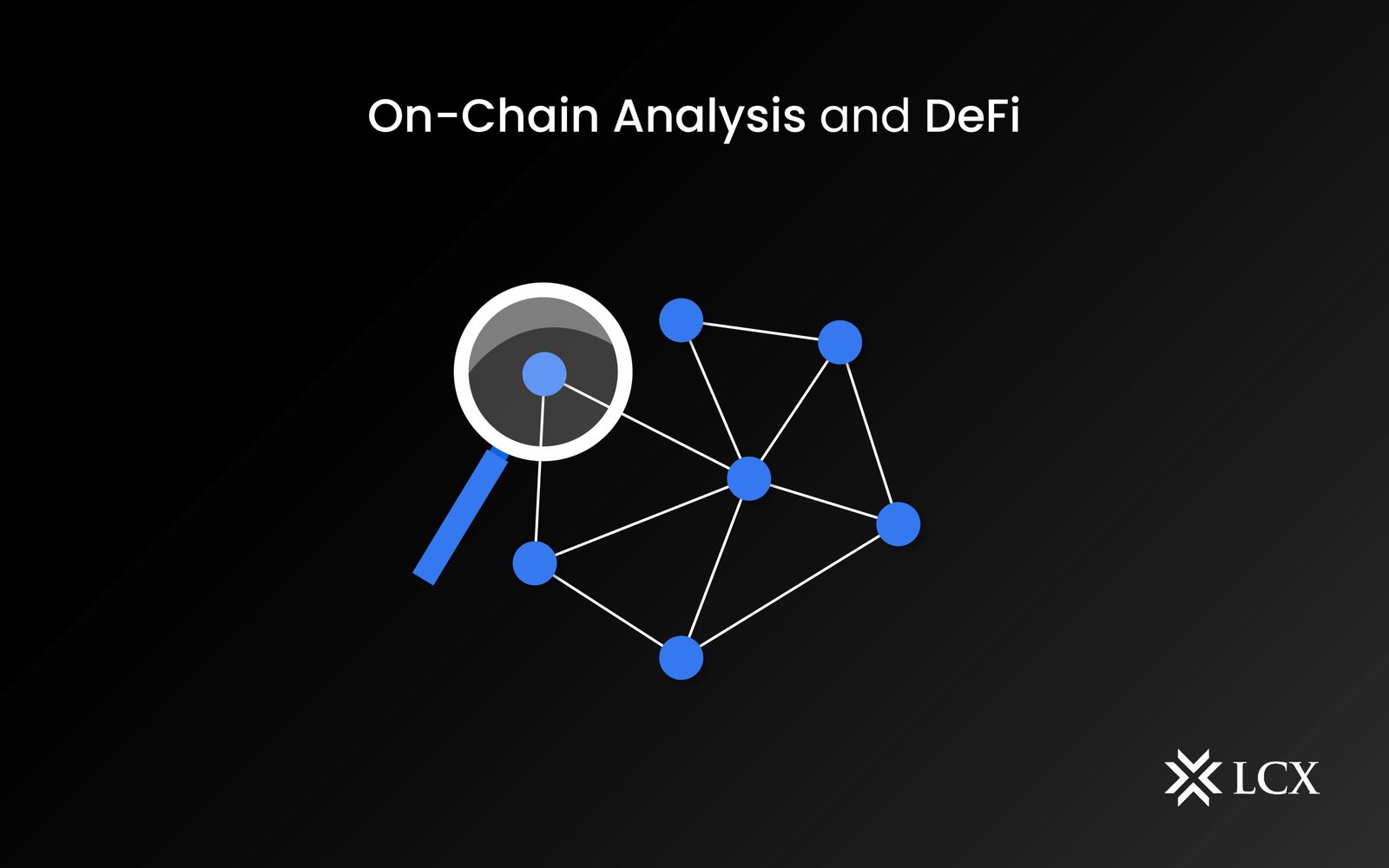
Wallet clustering is the process of grouping addresses that are likely controlled by the same entity or individual. The most widely used method is the multi-input heuristic: when a transaction spends from several input addresses simultaneously, those keys were presumably held by the same actor at that moment. Applied across the blockchain, this rule partitions the address space into clusters.
Clustering relies on a combination of signals: transaction inputs and outputs, timing patterns, shared counterparties, fund consolidation behavior, and exchange deposit/withdrawal flows. When multiple wallets consistently interact in predictable ways, analysts group them into a cluster representing one owner.
This technique transforms raw blockchain data into actionable intelligence. Traders use it to track whale movements, compliance teams use it for anti-money laundering investigations, and researchers use it to understand ecosystem activity.
The Limits of Clustering
Address clustering is a heuristic, not a fact. Research evaluating the multi-input heuristic against ground-truth data from European crypto-asset service providers found full-cluster precision and recall of only 0.36 and 0.44, respectively. For some services, the method fails almost entirely. Reliability varies so significantly between entities that no single error rate describes the method.
This matters because clusters generate investigative leads, not evidence. A prosecutor receiving a report that an address belongs to a cluster associated with illegal activity is looking at an algorithmic association, not proof that the address holder participated in that activity. Explainable, transaction-level evidence must replace cluster boundaries when findings need to withstand scrutiny.
Tracing Flows: Following Value Through the Network
Once addresses are labeled and grouped, the next task is tracing where value moves. “Follow the funds” sounds straightforward but conceals several distinct methodologies. An analyst might follow specific transaction outputs, a proportion of mixed value, the first value leaving an address, or the continuing economic equivalent after an asset swap. These approaches can produce different answers from the same dataset.
The working method involves starting from an anchor point, unfolding the outgoing path hop by hop, reading labels and cluster signals, and marking exits where value leaves what can be traced. Exchanges, mixers, and bridges are natural exit points.
Where Flows Break Down
Modern fund movement rarely follows a single chain. Cross-chain flows trace value across bridges, wrapped assets, and intermediate conversions—no single blockchain contains the complete sequence. Mixers deliberately weaken the observable relationship between inputs and outputs; while the graph records interaction with the service, ordinary path analysis may no longer support one-to-one correspondence between value entering and leaving. DeFi routing through smart contracts, liquidity pools, and aggregators means one user action can generate many internal calls and transfers. The analyst must distinguish the user’s economic intent from the technical execution path the protocol produced.
A critical caution: graph proximity is not evidence of relationship. A convergence point may belong to an exchange rather than a suspected actor. A liquidity pool connects thousands of unrelated users. An omnibus wallet represents many customers. Graph analysis reconstructs observable transaction relationships; without attribution and corroboration, it does not reconstruct the human relationship behind them.
Practical Applications Across Scenarios
On-chain intelligence serves different purposes depending on the question being asked.
For market intelligence, tools like Blockworks Intel allow users to filter thousands of assets by metrics including 30-day revenue, unlock status, and development activity, with natural language filtering and long-term monitoring capabilities. Wallet clustering helps traders assess whether large holders are accumulating or distributing by revealing the true size of whale holdings across multiple addresses.
For compliance and investigations, the first 48 hours after a hack are critical. Stolen funds follow a known pattern—gathering, hiding, bridging, exit—and each stage narrows what tracing can still accomplish. Investigators use entity labels to identify counterparties and assess risk, while clustering reveals whether multiple addresses connect to the same actor. Court-ready evidence requires reproducibility, a stated basis for every attribution, and chain completeness—habits that must be built into the investigation from the start.
For exchange monitoring, clustering enables estimation of exchange reserves, tracking of inflows and outflows, and assessment of liquidity conditions. But omnibus wallets complicate this: a single labeled address may represent thousands of unrelated beneficial owners, and a transfer out of it could be a customer withdrawal, an internal rebalance, a custody migration, or a cold-storage rotation. The chain shows an identical transaction in all four cases.
The Staleness Problem and Other Practical Warnings
Labels age. Exchanges migrate custody providers, funds change administrators, projects rotate treasury wallets, and companies merge or fail without on-chain announcements. A label attached one year may describe a relationship that ended the next. Stale labels are worse than missing ones because a missing label is visibly missing, while a stale one reads as current.
The practical implication is to treat any single labeled flow as a lead worth investigating rather than a finding worth publishing. Repeated flows between the same clusters over time are more trustworthy than any single transfer because a persistent pattern is less likely to rest on one bad link.
Choosing the Right Tool for the Question
Platforms differ in their unit of analysis, and that difference determines which questions they can answer. Glassnode is built around aggregate market metrics—its unit is the network or cohort, producing time series rather than participant-level data. Nansen is built around labeled wallets on EVM chains, with the address as the unit and behavioral tags attached. Arkham focuses on entity attribution and the address graph across chains.
These are not competitors doing the same job. They are different instruments that happen to share an input. A cohort-level question about long-term holders fits an aggregate metrics product. A question about what one labeled wallet did this week fits a wallet-first product. A question about which organization controls a cluster needs an attribution-first product.
Key Takeaways
On-chain intelligence transforms transparent but opaque data into readable insights. Entity labels answer who is behind an address, wallet clusters reveal common control across multiple addresses, and flow tracing shows where value moves—and where it stops being traceable.
The methods are powerful but probabilistic. Clustering generates leads, not convictions. Labels go stale. Graph proximity is not relationship. The analyst who understands these limits produces better work than the one who treats tool output as ground truth.