Every plumber remembers their first time wrestling with a stubborn pipe—sweating over a hacksaw, praying the cut would be straight, and hoping the bend wouldn’t kink. Those days, thankfully, are behind us. Modern pipe cutting and bending tools have transformed plumbing from a battle of brute force into a craft of precision.
Whether you’re installing a complex radiant heating system or simply fixing a leak under the sink, having the right tools for cutting and bending isn’t just a luxury—it’s the difference between a job done fast and a job done right. Let’s dive into the tools that make pipe work easier, cleaner, and more professional.
The Art of the Cut: Essential Pipe Cutters
A precise cut is the foundation of any leak-free plumbing system. While hacksaws can get the job done, they often leave rough edges and require significant elbow grease. That’s why professional plumbers and serious DIYers turn to pipe cutters.
The beauty of a pipe cutter lies in its simplicity and effectiveness. Instead of sawing back and forth, you rotate the tool around the pipe, gradually tightening a cutting wheel with each turn . This method produces a clean, square cut that’s essential for secure fittings. Different jobs call for different styles of cutters .
- Automatic Pipe Cutters: These are the “set it and forget it” tools of the plumbing world. You clamp them onto the pipe, turn them in one direction, and they automatically tighten until the cut is complete. They’re incredibly fast and a lifesaver when working in tight spots .
- Adjustable Pipe Cutters: The classic and most versatile option. You rotate the tool around the pipe, tightening the knob after each rotation. This gives you total control and is suitable for a wide range of metal pipes, from copper to steel .
- Plastic/PVC Pipe Cutters: If you’re working with PVC, CPVC, or PEX, a scissor-like or ratcheting cutter is the way to go. They deliver a fast, clean cut through plastic without crushing the pipe, making them a staple for modern plumbing installations .
Why Deburring is Non-Negotiable
Cutting a pipe is only half the battle. Once that cutting wheel has sliced through, it often leaves a sharp, jagged burr on the inside of the pipe . Skipping the deburring step is the most common—and costly—mistake a plumber can make. This rough edge can restrict water flow, strip the insulation off wires in electrical conduits, and prevent fittings from seating properly, leading to leaks down the line .
A professional always uses a pipe deburring tool to smooth both the inside and outside edges of the cut. A good rule of thumb: run your fingertip lightly around the inner edge of the freshly cut pipe. If you feel a snag, it needs more reaming .
Precision Bending: The Art of Shaping Pipes
Bending a pipe isn’t just about changing its direction. It’s about creating smooth, continuous pathways for water, gas, or other fluids with minimal resistance, and doing so without kinking or weakening the pipe. A pipe bender is the tool for this job, allowing you to shape metal and plastic pipes into precise angles .
Using a bender requires some skill. You’ll need to measure and mark your bend location accurately, then position the pipe in the bender’s forming groove. The tool then applies gradual pressure to create the desired angle without crushing the pipe . Just like cutters, pipe benders come in a few different flavors:
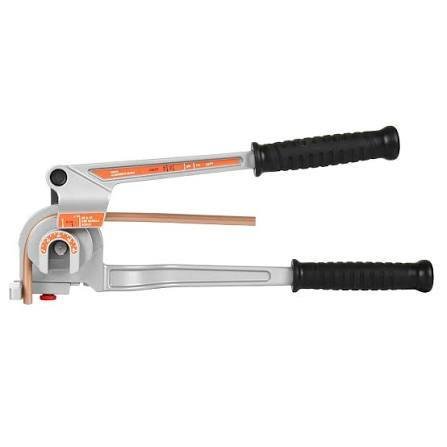
- Manual Pipe Benders: These are the go-to for most plumbers. They’re portable, simple, and don’t require electricity. You use a lever or ratcheting mechanism to apply pressure. They’re perfect for smaller jobs and working on-site, but require physical effort and a bit of finesse .
- Hydraulic Pipe Benders: When you need to bend larger, thicker pipes (like steel or stainless steel), a hydraulic bender is your best friend. It uses hydraulic pressure to do the heavy lifting, making smooth, controlled bends with minimal effort and reducing operator fatigue .
- Electric Pipe Benders: For precision and repetitive bending, electric benders are the answer. An electric motor provides consistent power, reducing manual strain and speeding up the process. They’re common in industrial settings where accuracy and volume are key .
Advanced Tools for Professional Installations
For large-scale projects or situations where space is severely limited, plumbers may reach for more specialized equipment. Pressing tools, for example, have revolutionized pipe joining. Battery-powered pressing tools like the Geberit ACO series allow plumbers to join pipes with incredible speed and reliability, without the need for solder or open flames .
These tools use specialized pressing jaws, rings, and collars to create a permanent, leak-tight connection. For large diameter pipes, where a traditional jaw won’t fit, pressing collars are used to secure the fitting from the outside . This technology not only saves time but also significantly enhances safety on the job site.
Choosing the Right Tools
Ultimately, the best tool for the job depends on the material you’re working with and the complexity of the task . Copper tubing can be cut with a simple rotary cutter and bent with a manual bender. Steel and stainless steel may require a more robust cutter and a hydraulic bender. For plastic pipes like PEX, a scissor-style cutter is the only way to go.
Investing in high-quality, professional-grade tools is a choice that pays for itself. They offer greater durability, precision, and ease of use, ensuring that every project goes smoothly from the first measurement to the final connection.