Access to clean water is a basic human need, yet for people in remote areas, disaster zones, or off-grid locations, it can be a daily struggle. Traditional infrastructure often fails in these environments, leaving communities vulnerable to dehydration and waterborne diseases . This is where portable water purification solutions step in as a lifeline. From hand-powered pumps to solar desalination, technology is making it possible to turn murky, contaminated water into a clear, life-sustaining resource.
The High Stakes of Water Scarcity in Disaster Zones
In the aftermath of natural disasters like hurricanes or floods, the water infrastructure we rely on is often the first casualty. Pipes break, treatment plants are flooded, and reservoirs become contaminated. This turns a crisis into a catastrophe, as the risk of waterborne diseases skyrockets . Furthermore, logistical challenges like blocked roads and broken communication lines can delay the delivery of bottled water, making it nearly impossible to reach isolated communities. In these moments, traditional responses struggle, and a more agile solution is needed immediately.
Portable Purification: The First Line of Defense
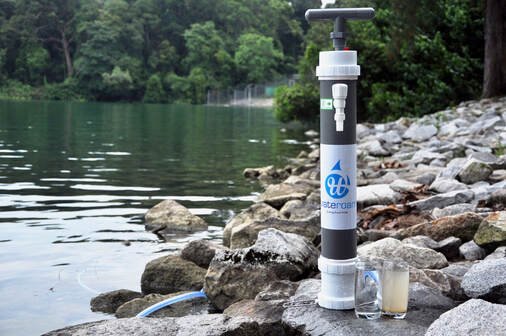
The market is filled with innovative tools, each with a different approach to solving the same problem: making water safe. Here are some of the most critical technologies currently available.
Pump-Action Purifiers: The Virus Slayers
Unlike basic water filters that remove bacteria and protozoa, water purifiers go a step further to eliminate viruses—which are much smaller and more dangerous . The LifeSaver Liberty is a prime example. Born from the inventor’s experience during the 2004 tsunami and Hurricane Katrina, this device uses a hand-operated pump to force water through an ultrafiltration membrane with a pore size of 0.015 microns. This is small enough to catch viruses, bacteria, and parasites, ensuring that even water from a muddy puddle becomes safe to drink . It also includes activated carbon discs to improve the taste and odor of the water, making it a premium solution for expeditions and emergencies alike .
High-Volume Pressurized Systems: Family and Community Support
For groups or families, the LifeStraw Escape offers a high-flow, pressurized solution. This 5.25-gallon tank uses a three-stage filtration system and a hand pump to purify water rapidly, delivering approximately 1.3 liters per minute . While operating the pump requires significant force (about 50 pounds of pressure at max), the ability to produce clean water for a group makes it a staple for off-grid living and emergency preparedness. It also has a failsafe design to prevent drinking unpurified water when the filter is blocked .
Gravity-Fed Systems: Simplicity at its Finest
When you want to eliminate physical effort, gravity is your best friend. The PrepPro Universal Gravity-Powered Water Purification Core Kit is a clever, bucket-compatible system. It uses 0.1μm ceramic ultramembrane technology to filter out sediment and reduce cloudiness . You simply mount the core in any bucket, pour in untreated water, and let gravity do the work. This is an ideal solution for long-term emergency kits, bug-out locations, and remote properties as it operates entirely without electricity or pumps .
Solar-Powered and Mobile Systems: Sustainability in Action
The future of remote water purification lies in renewable energy. Solar-powered systems, like the mobile Tuk Tuk Cargo Water Filtration System being deployed in Kenya, use reverse osmosis to provide clean water and electricity to remote communities . Another example is the Bluewater Emergency Station, a robust unit designed for disaster relief and field hospitals. It is built with heavy-duty wheels and shock-absorbing foam, capable of purifying highly contaminated water and serving up to 10,000 people per day .
Research into solar-thermal systems is also yielding exciting results. A study published in 2026 demonstrated a portable filtration system combining solar heating with Moringa oleifera seed powder. The heat accelerates the natural coagulation process, effectively clarifying highly turbid water and eliminating bacteria like E. coli without using electricity .
Cutting-Edge Science: The Future is Now
While pump-and-filter systems are standard, science is pushing boundaries. Researchers have recently developed a hand-powered device that uses nanoparticles to disinfect water. By turning a crank, you “wake up” the particles, creating a charge that produces reactive oxygen species. These punch holes in the cell membranes of bacteria and viruses, effectively killing them in seconds. This could revolutionize decentralized water treatment in off-grid communities .
Choosing Your Defense
Selecting the right tool depends on your situation:
- For individual hikers: A lightweight pump-action purifier or a simple filter straw is best.
- For family emergencies: A gravity-fed system or a high-flow pump is more suitable.
- For community disaster relief: High-capacity solar-powered systems or mobile desalination units are necessary.
In the battle for safe drinking water in remote areas, these portable purification technologies are the ultimate game-changers. They provide not just water, but the peace of mind that survival is within reach.