When you turn on your kitchen faucet, do you ever wonder what’s really in that glass of water? While municipal water treatment does a solid job, the journey from the treatment plant to your tap can introduce unwanted guests—chlorine, sediment, and even heavy metals. This is where carbon block filters step in, offering a sophisticated solution that goes far beyond simple straining.
What Exactly is a Carbon Block Filter?
Unlike the loose, granular activated carbon (GAC) filters you might be familiar with, carbon block filters are compressed blocks of finely ground activated carbon fused together under high pressure with a thermoplastic binder . This creates a dense, solid structure that transforms ordinary carbon into a highly efficient filtration powerhouse.
Think of it like the difference between a pile of loose gravel and a paved road. Both are made of the same basic material, but the paved road is far more structured, durable, and effective at guiding water where you want it to go.
The Three-Pronged Attack: How Carbon Block Filters Work
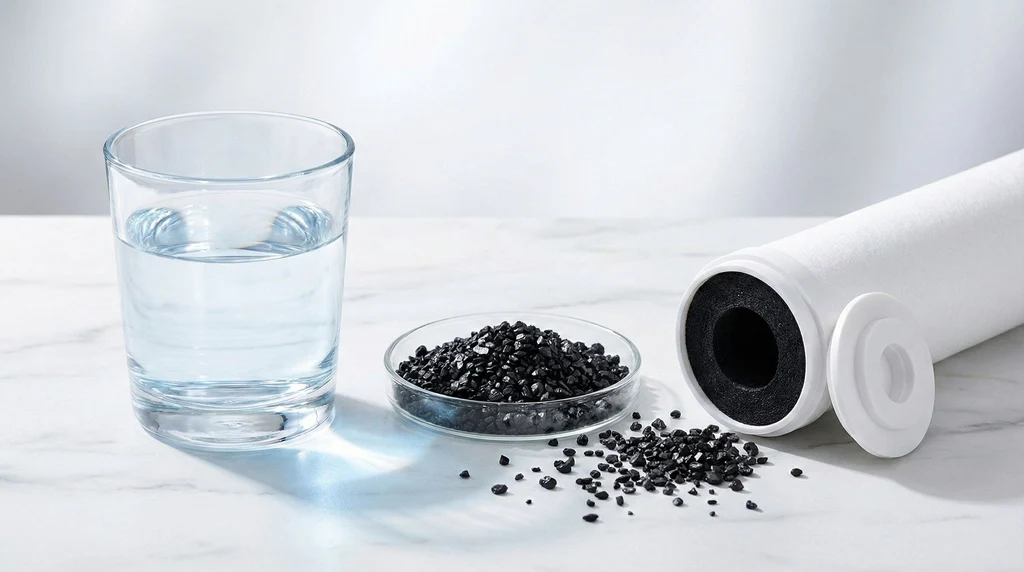
Carbon block filters don’t rely on just one method to clean your water. They use a sophisticated combination of three distinct mechanisms :
Physical Filtration (Mechanical Straining)
This is the most straightforward method. The dense structure of a carbon block creates a maze of tiny pores. As water passes through, larger particles—sediment, dirt, rust, and even microscopic cysts—are physically trapped, unable to pass through the tight spaces .
Chemical Adsorption
This is where the real magic happens. The activated carbon has an enormous surface area—just imagine a single gram with a surface area equivalent to a football field. Dissolved impurities like chlorine, volatile organic compounds (VOCs), and certain pesticides are attracted to and trapped on the carbon’s surface by electrokinetic forces . It’s like a microscopic magnet for contaminants.
Chemical Reaction
Some carbon block filters are engineered to do more than just trap contaminants—they can actually transform them. For instance, “catalytic carbon” can convert chlorine compounds into harmless substances, effectively neutralizing them . The dense block also forces water into prolonged contact with the carbon, giving these reactions more time to work their magic .
Carbon Block vs. GAC: Why the Block Wins
Granular activated carbon filters (GAC) are cheaper to manufacture, which is why you’ll find them in many budget-friendly water filter pitchers. However, carbon block filters offer several critical advantages that make them the premium choice for serious water filtration :
No Channeling: Water can develop “pathways” through loose GAC, essentially bypassing the carbon entirely. A solid carbon block forces water to travel through the block, ensuring 100% of the water gets treated .
Better Contact Time: The dense structure of the carbon block increases the time water spends in contact with the filter media. This “dwell time” is crucial for effective adsorption—especially for stubborn contaminants that require longer exposure to be removed .
No Carbon Fines: GAC filters can release tiny carbon particles, resulting in that annoying “gray water” during initial use. Carbon block filters are designed to prevent this release, delivering cleaner water from the start .
Superior Filtration: Because of their tight structure, carbon block filters can remove much smaller particles than GAC, including microbial cysts and even some heavy metals like lead when specially formulated .
What Carbon Block Filters Remove
The benefits of carbon block filtration extend to a wide range of common water contaminants:
Chlorine and Chloramine: These are the most common water disinfectants. Carbon block filters excel at removing them, dramatically improving the taste and odor of tap water .
Heavy Metals: While not all carbon filters are created equal, advanced carbon block filters are certified to reduce lead, mercury, and other heavy metals .
Organic Contaminants: These filters are effective against a broad spectrum of harmful organics including pesticides, herbicides, and industrial chemicals .
Sediment and Particles: Carbon block filters can also act as sediment filters, removing rust, sand, and dirt, which helps protect downstream appliances and improves water clarity .
The Science of Manufacturing Precision
The effectiveness of a carbon block filter depends significantly on how it’s manufactured. High-quality filters use precisely ground carbon powder with controlled particle sizes. Too coarse, and you lose surface area. Too fine, and the filter becomes prone to clogging .
Modern production methods use extrusion technology, allowing for continuous, large-scale manufacturing while maintaining rigorous quality standards. Some advanced filters even incorporate an outer pre-filter wrap that captures larger particles before they reach the carbon block, extending the filter’s lifespan .
The Bottom Line
Carbon block filters represent a fascinating convergence of materials science and engineering. They transform simple activated carbon—a material we’ve used for centuries—into a sophisticated filtration tool capable of removing a vast array of contaminants.
When you choose a carbon block filter, you’re not just getting a simple sieve for your water. You’re getting a powerful combination of physical filtration, chemical adsorption, and catalytic action that works together to deliver cleaner, better-tasting drinking water right from your tap. The dense, uniform structure of the carbon block ensures every drop of water gets the comprehensive treatment it deserves, making it one of the most effective point-of-use water treatment technologies available today .