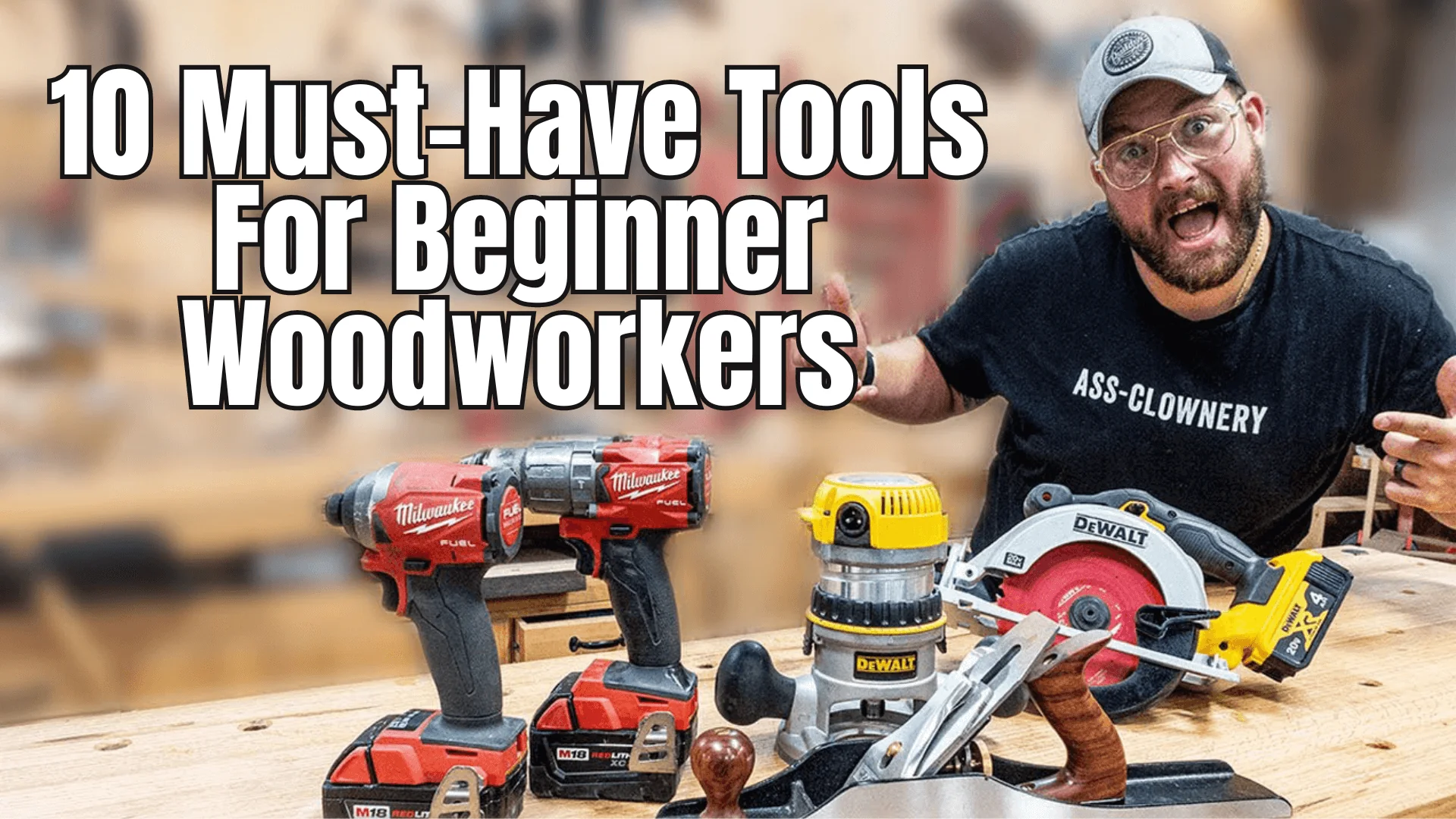

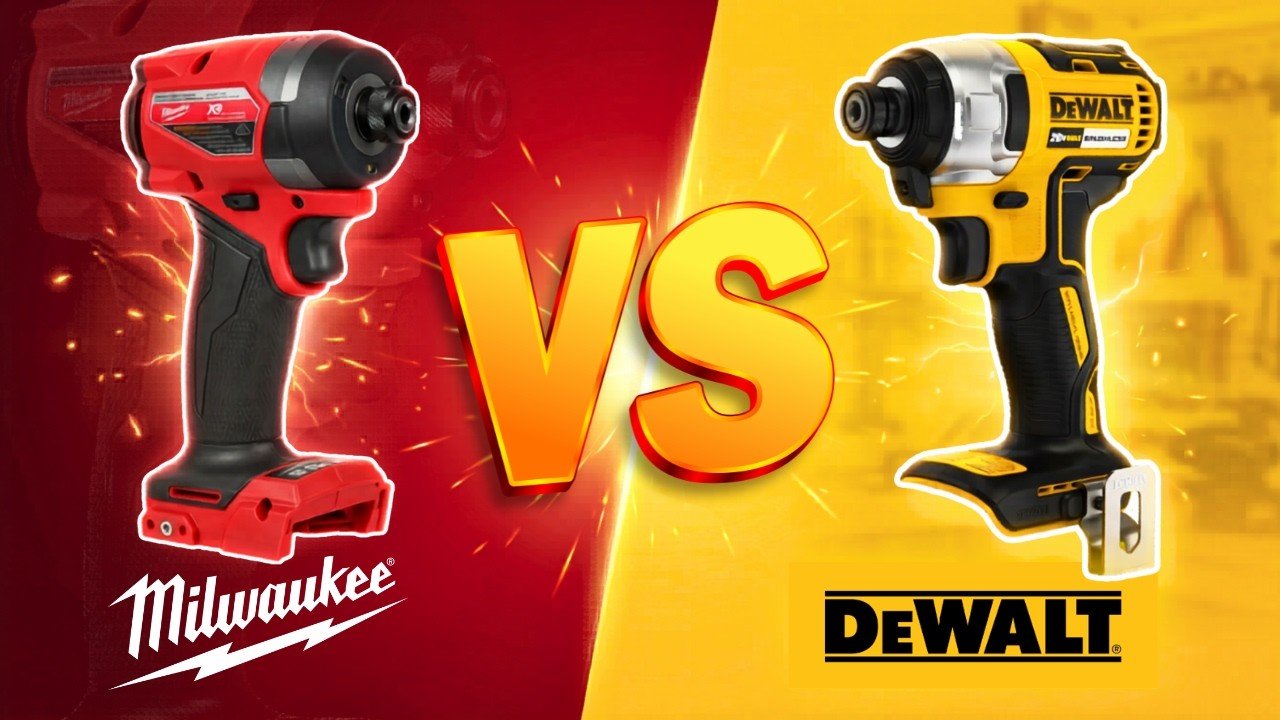
The debate is as old as cordless tools themselves—maybe even older than the yellow-and-black versus red-and-black color schemes that dominate job sites and garage workshops everywhere. In 2026, the question isn’t just about which brand makes a better drill; it’s about which ecosystem will serve your projects, budget, and ambitions best.
After digging through real-world tests, consumer trust rankings, and what pros are actually saying this year, here’s the honest take: both DeWalt and Milwaukee make exceptional tools, but they shine in different ways. The “better” brand depends entirely on who you are and what you’re building.
The 2026 Landscape: Trust, Performance, and What Changed
DeWalt’s Trust Advantage
For the fifth consecutive year, DeWalt has been crowned America’s most trusted power tool brand according to Lifestory Research’s 2026 study. Based on feedback from over 14,000 consumers, DeWalt earned a Net Trust Quotient Score of 119.7, placing it at the top of 13 major brands . Interestingly, Milwaukee ranked fourth at 112.2, just behind Craftsman and Bosch . That’s a significant gap that suggests consumer confidence runs deeper with the yellow brand.
But trust isn’t everything. When Pro Tool Reviews recently compared the flagship hammer drills head-to-head, the results were incredibly close—so close that the winner came down to personal preference . The DeWalt DCD1007 was slightly faster and more powerful, while the Milwaukee 2904 was smaller, lighter, and came with better kit value .
Power and Performance: Who Packs the Bigger Punch?
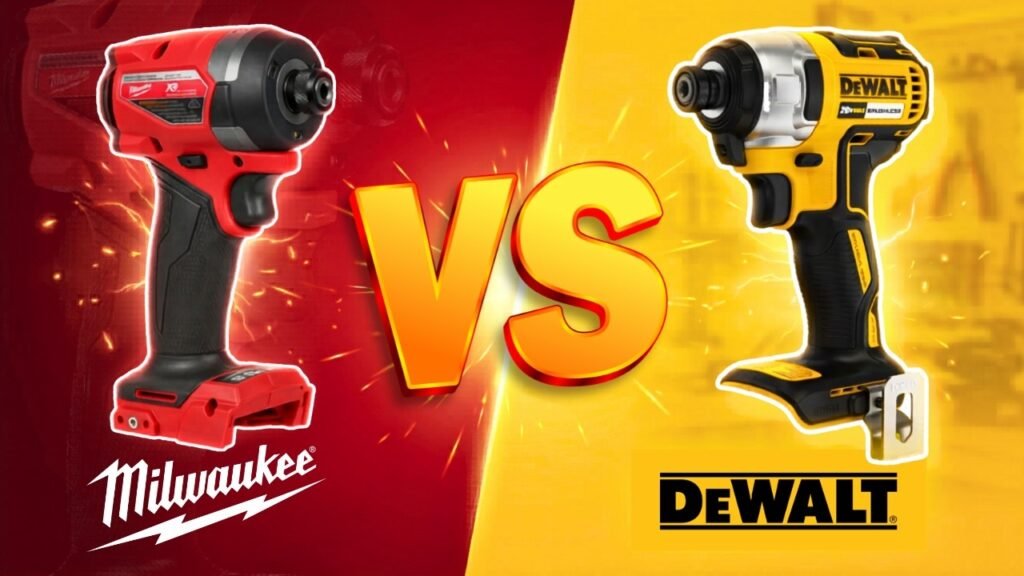
The Impact Driver Showdown
If you’re looking at pure spec sheets, DeWalt’s 20V Max XR 1/4-inch 3-Speed High Torque Impact Driver (DCF860B) delivers 2,500 in-pounds of maximum torque—the highest in its class . Milwaukee’s M18 Fuel counterpart tops out at 2,000 in-pounds .
But here’s where things get interesting: in independent tests, the lower-torque Milwaukee sometimes completed tasks faster because of how its hammer-and-anvil system delivers power . It’s not just about peak numbers; it’s about how that power gets applied.
For heavy-duty drilling, the DeWalt DCD1007 hammer drill consistently outperformed the Milwaukee 2904 across multiple tests:
- Driving large screws: DeWalt averaged 2.42 seconds vs. Milwaukee’s 2.49 seconds
- Drilling with a self-feed bit: DeWalt at 1.73 seconds vs. Milwaukee at 1.89 seconds
- Concrete drilling: DeWalt at 6.39 seconds vs. Milwaukee at 6.84 seconds
The edge is clear but marginal—we’re talking fractions of a second .
Where Milwaukee Reigns
When it comes to sheer muscle for the toughest jobs, Milwaukee’s M18 Fuel line is hard to beat. Their high-torque impact wrench delivers 1,600 ft-lb of breakaway torque and 1,200 ft-lb of fastening torque, reaching 2,000 RPM and 2,400 impacts per minute .
In a broader comparison across five common tool categories (drills, jigsaws, miter saws, angle grinders, and multitools), Milwaukee earned the top spot for overall power output, with DeWalt coming in second and Makita third .
The Ecosystem: More Than Just a Drill
Catalog Size Matters
One of the biggest considerations when choosing a cordless system is how many tools share your batteries. Here’s how the lineups compare:
- Makita LXT: 350+ tools (largest)
- Milwaukee M18: 325+ tools
- DeWalt 20V Max XR: 250+ tools
Milwaukee’s edge isn’t just about quantity—they’ve consistently innovated for specific trades, offering specialized tools like hydraulic crimpers, pipe inspection cameras, and even heated jackets . DeWalt covers all the core tools well, but if you need something niche, Milwaukee’s got you covered.
Battery Technology
DeWalt’s batteries are generally considered more durable, and their FlexVolt technology allows batteries to power both 20V Max and 60V FlexVolt tools . Their advanced tabless PowerPack batteries (like the 8.0Ah included with the DCD1007 kit) offer improved power delivery .
Milwaukee’s REDLITHIUM batteries are known for industry-leading capacity and longevity, and their M12 and M18 platforms offer excellent cross-compatibility . The newer Forge batteries further boost performance in their latest tools .
Ergonomics: The “Feel” Factor
Weight and Balance
This is where the brands diverge significantly:
- Milwaukee 2904 hammer drill: Weighs just 3.23 lbs (bare tool), 5.63 lbs with an 8.0Ah Forge battery
- DeWalt DCD1007 hammer drill: 4.16 lbs (bare tool), 6.31 lbs with an 8.0Ah PowerPack battery
That 0.68-pound difference is noticeable during extended overhead work . Popular Mechanics’ review of the DeWalt Max XR noted that 6.3 pounds is “significantly heavier than other pro-grade cordless hammer drills” they’ve tested, though they praised its balance and compact 7.4-inch head length .
Comfort and Control
DeWalt’s rubberized grips and slimmer handles make them feel more natural during all-day use . Milwaukee counters with heavier tools but better anti-vibration features and contour-shaped grips .
The DeWalt DCD1007 also wins on features: a pivoting LED light with three settings (including a 20-minute work light mode), anti-rotation kickback control, and three speed settings for better torque management . Milwaukee’s 2904 is more stripped-down by comparison, with just two speeds and a basic LED .
Durability: Which One Survives the Job Site?
If you’re rough on your tools, Milwaukee’s reputation for durability is well-earned. They’re built to withstand mud, rain, and drops with superior shock resistance and sealing . Their 5-year limited warranty beats DeWalt’s 3-year offering, reflecting that “contractor grade” commitment .
DeWalt tools are plenty durable for typical DIY and light-to-medium contractor use, but they show cosmetic wear faster under extreme abuse .
Smart Features: One-Key vs. Tool Connect
Milwaukee’s ONE-KEY platform is a standout. It lets you track, lock, and customize tools through your smartphone—a genuine game-changer for inventory management and theft protection on busy job sites . DeWalt offers Bluetooth tracking on select tools, but it’s not as comprehensive .
Price: Getting the Most for Your Money
Flagship Drill Pricing
| Brand | Model | Bare Tool Price | Kit Price |
|---|---|---|---|
| DeWalt | DCD1007 | $249 | $349 (8.0Ah PowerPack battery) |
| Milwaukee | 2904 | $229 | $329 (2 x XC5.0Ah batteries) |
| Milwaukee | 2906 (One-Key) | $279 | $449 (2-tool combo) |
DeWalt’s kit comes with a more advanced battery technology (tabless PowerPack), but Milwaukee’s two-battery kit offers better value for runtime .
Overall Value
When comparing across five common tool types, Milwaukee’s Fuel line averaged $271.80, while DeWalt averaged $246.20—making DeWalt slightly more affordable . However, Milwaukee has both budget-friendly standard M18 tools and premium Fuel options, giving buyers more flexibility .
Real-World User Reviews
Across thousands of user reviews for common tools, the average scores are remarkably close:
- DeWalt: 4.778/5 (32,781 reviews)
- Milwaukee (Fuel only): 4.794/5 (6,180 reviews)
- Milwaukee (combined): 4.761/5 (8,406 reviews)
- Makita: 4.717/5 (4,640 reviews)
When focusing solely on Fuel-badged Milwaukee tools, they actually take the top spot . But across the full lineup, DeWalt edges ahead by a hair.
Who Should Choose DeWalt?
- Homeowners tackling serious DIY projects: Building decks, sheds, or renovations. The power is more than enough, with excellent control features to prevent rookie mistakes .
- Professionals who value comfort and ergonomics: If you’re using tools all day, every day, DeWalt’s lighter weight and better grips reduce fatigue .
- Budget-conscious buyers: DeWalt tends to offer slightly better value, especially on combo kits .
- Users who want advanced features: The pivoting LED work light, anti-rotation safety, and 3-speed controls are genuinely useful .
Who Should Choose Milwaukee?
- Heavy trade professionals: Framing, commercial construction, and industrial work where tools get abused daily .
- Users needing specialized tools: Plumbing, electrical, or mechanical work where niche tools are essential .
- Anyone wanting smart features: ONE-KEY tracking and inventory management is a legitimate advantage .
- Users who prioritize compact size and light weight: Milwaukee’s latest Fuel tools are remarkably small and light for their power .
The Bottom Line
Here’s the truth: you can’t go wrong with either brand. Both DeWalt and Milwaukee make tools that pros trust and weekend warriors love. The differences are real but marginal—we’re talking seconds in task completion and ounces in weight.
Choose DeWalt if: you want great power, excellent control features, and slightly better value in a comfortable, easy-to-use package .
Choose Milwaukee if: you need maximum durability, specialized trade tools, advanced smart features, and don’t mind paying a premium for that “contractor grade” reputation .
And if you’re just starting out? Consider which brand your friends or colleagues use—battery sharing is a real convenience. Both ecosystems are deep enough to grow with you. In 2026, the DeWalt vs. Milwaukee debate has no clear loser, just two winners suited to different kinds of builders.