
There’s a profound satisfaction in using a truly sharp tool. Whether you’re slicing through a piece of wood with a chisel, pruning a rose bush, or drilling a precise hole, the efficiency and joy it brings are undeniable. But that feeling fades quickly when you reach for a dull blade. It’s frustrating, inefficient, and honestly, dangerous.
Many DIYers and gardeners resign themselves to struggling with dull tools, thinking sharpening is a dark art best left to professionals. But I’m here to tell you it’s a skill anyone can learn. A sharp tool is a safe tool, and mastering the basics of sharpening will not only make your projects more enjoyable but can literally extend the life of your tools by years . Let’s get your tools working for you again.
The Why: Safety, Performance, and Longevity
Before we get into the grit, let’s talk about why sharpening is non-negotiable. The most important reason? Safety. A dull tool requires more force to cut, making it far more likely to slip and cause a serious injury. A sharp tool is predictable and requires minimal effort, giving you much greater control .
From a performance standpoint, a sharp blade creates clean cuts instead of tearing or shredding material. This is crucial in woodworking for precise joinery and in the garden to prevent tearing plant tissue, which invites disease and pests . And when you consider longevity, you’re not just saving a blade; you’re saving the entire tool. A tool with a well-maintained edge lasts longer, saving you money and reducing waste .
Assembling Your Sharpening Arsenal
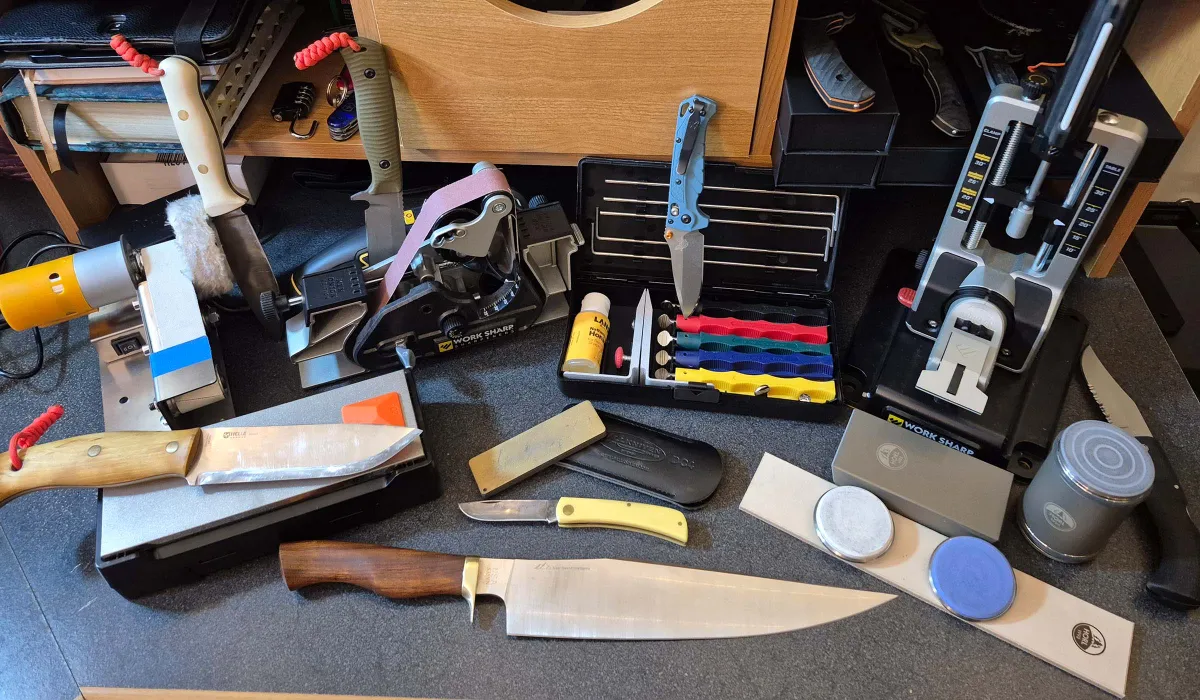
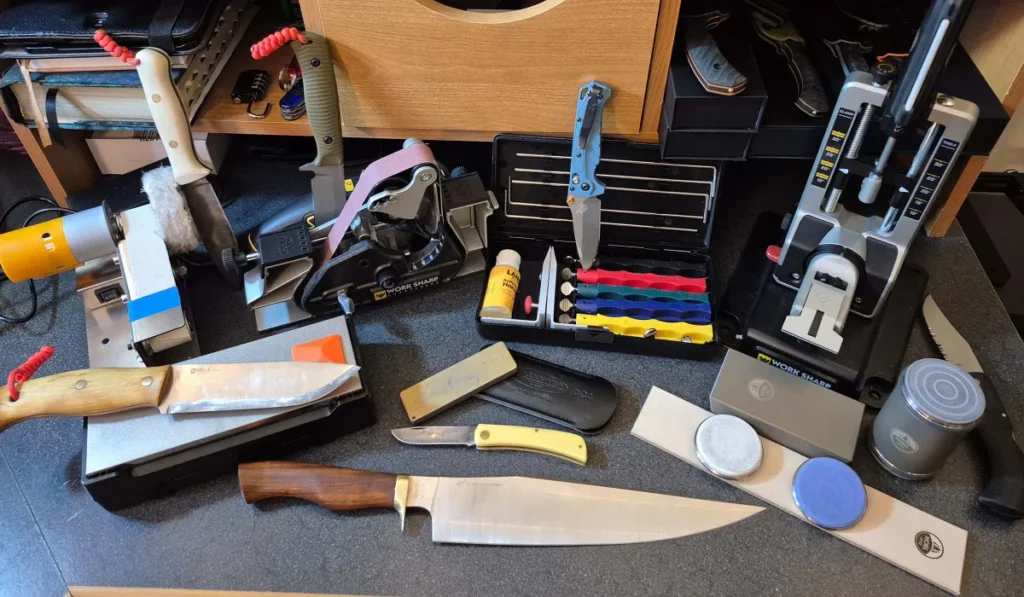
You don’t need a workshop full of expensive gear to start sharpening. A few key tools will cover most of your needs. The main categories are whetstones (also called sharpening stones), files, and for heavier work, a grinder.
Whetstones
Whetstones are the heart of sharpening for most DIYers. They come in a range of grits, which is a measure of the stone’s abrasiveness. Lower numbers (coarse) are for reshaping a very dull or damaged edge, while higher numbers (fine) are for honing and polishing that edge to a razor finish .
- Oil Stones: These are traditional stones that use oil as a lubricant to float away metal filings. They are durable and don’t wear out quickly, but they can be messy .
- Water Stones: These are popular because they cut faster and use water (or a water-based lubricant) which is easy to clean up. They are softer than oil stones and wear more quickly, but many find the speed and edge quality worth the trade-off .
- Diamond Stones: These are steel plates coated with industrial diamonds. They are incredibly hard, cut fast, and stay flat, making them great for very hard steels and for flattening other stones. They are often the most expensive option .
Files and Honing Rods
For many outdoor and garden tools, a simple file is the most practical option. Files cut only on the forward stroke, so use a smooth, firm push and lift on the return . A 10-inch mill bastard file is a great all-rounder for spades, hoes, and other tools .
Honing rods, often found in kitchen knife sets, don’t actually sharpen. Instead, they realign the microscopic edge of the blade, which is why they’re great for quick touch-ups between proper sharpenings . Regular honing can significantly extend the life of your edge.
Electric Sharpeners and Grinders
For speed and heavy reshaping, electric sharpeners and bench grinders can be a lifesaver. They are ideal for drill bits (with a dedicated sharpener like the Drill Doctor) and for quickly repairing chipped or damaged blades .
Crucial Warning: Using a bench grinder comes with a significant risk of overheating the blade. If the steel gets too hot, it can ruin its temper, which is the heat treatment that gives the tool its hardness and ability to hold an edge. The steel can become soft and won’t stay sharp, or it can become brittle and chip . If you use a grinder, grind slowly, apply minimal pressure, and dip the tool in water frequently to keep it cool.
Step-by-Step: Sharpening by Tool Type
The exact method varies from tool to tool, but the principles remain the same: clean the tool first, then abrade the edge to a consistent angle.
For Woodworking: Chisels and Plane Irons
These tools demand a precise, polished edge. The goal is to create two perfectly flat, smooth surfaces that meet at a sharp angle . For bench chisels, a primary bevel of 25° is common, and a secondary, slightly steeper micro-bevel (e.g., 30°) can be added for extra durability .
- Flatten the Back: Before you do anything else, lap the flat back of the chisel or plane iron on a coarse stone. This is a one-time job for a new tool. It removes the scratches from the factory and creates a perfectly flat reference surface .
- Sharpen the Bevel: Place the bevel flat on your coarsest stone. Use a honing guide to maintain a consistent angle if you are a beginner . Use a smooth, even stroke, moving the entire blade across the stone to ensure even wear. Work your way through progressively finer grits. You should see a scratch pattern develop and then become smoother with each stone .
- Remove the Wire Edge: As you sharpen, a small curl of metal called a “wire edge” or “burr” will form on the back of the blade. This is a good sign it means you’ve removed enough metal. Once it forms, flip the blade over and lay its flat back on a fine stone. Take a few light strokes to remove the burr .
- Strop for Perfection: For a final, razor-sharp edge, run the bevel and then the back across a leather strop charged with a honing compound. This removes the last vestiges of the burr and polishes the edge to a mirror finish .
For the Garden: Pruners, Shears, and Spades
Garden tools need a sharp, durable edge. A file is often the tool of choice, as you’re not looking for a polished, mirror finish .
- Pruning Shears: First, clean the blade of any sap or dirt . If you can, disassemble them for easier access . Hold the blade against a sharpening stone or file at the original angle (usually 20-30°) . Follow the existing bevel with smooth strokes, working on the flat side if it’s a bypass pruner or both sides if it’s an anvil type . A few strokes are usually enough.
- Spades and Hoes: Secure the tool in a vise. Using a mill file, push it along the edge in one direction to sharpen the bevel . The goal is to create a clean, sharp edge that will cut through soil and roots. For hoes, it can be helpful to think of sharpening it like a knife that you use to slice through the soil.
The “Throwaway”: Sharpen Drill Bits
A dull drill bit creates heat, smoke, and ugly holes . They can and should be sharpened.
- Using a Bench Grinder: This is the fastest method. With safety glasses on, hold the bit at a 60° angle to the wheel, with the cutting edge parallel to it . Carefully grind the cutting edge, rotating the bit to grind the relief area behind the cutting lip. Count your time in seconds and dip the bit in water to cool it. Repeat on the other side, ensuring you grind the same amount .
- Using a Drill Sharpener: Tools like the Drill Doctor are incredibly easy to use and take the guesswork out of the process . They align and grind the bit to the perfect angle automatically. If you sharpen a lot of bits, this is a worthwhile investment.
The Final Word: Post-Sharpening Care
Your job isn’t done once the edge is sharp. Proper storage and maintenance will keep it that way for longer.
- Cleaning: Always clean your tools after use to remove dirt, moisture, and plant sap, which can cause rust .
- Storage: Store tools in a dry place. Keep them separated so they don’t bump against each other and dull the edges. Hanging garden tools or using a tool roll for chisels is a great idea .
- Rust Prevention: A light coat of oil (like WD-40, machine oil, or Boeshield T-9) wiped over the metal parts of your tools provides a crucial barrier against moisture and prevents rust .
Your Sharpening Journey Starts Now
Learning to sharpen your tools is an investment of time that pays massive dividends. It unlocks the full potential of your equipment, elevates the quality of your work, and creates a safer working environment.
Don’t be intimidated by the myriad of techniques and tools. Start simple. Pick a dull knife or a pair of garden shears and give it a try. Remember, a sharp tool is the hallmark of a true craftsman, and it is a skill that is well within your reach.